

Pak’s long-range missiles capable of targeting the US, says Tulsi Gabbard
Pak’s long-range missiles capable of targeting the US, says Tulsi Gabbard
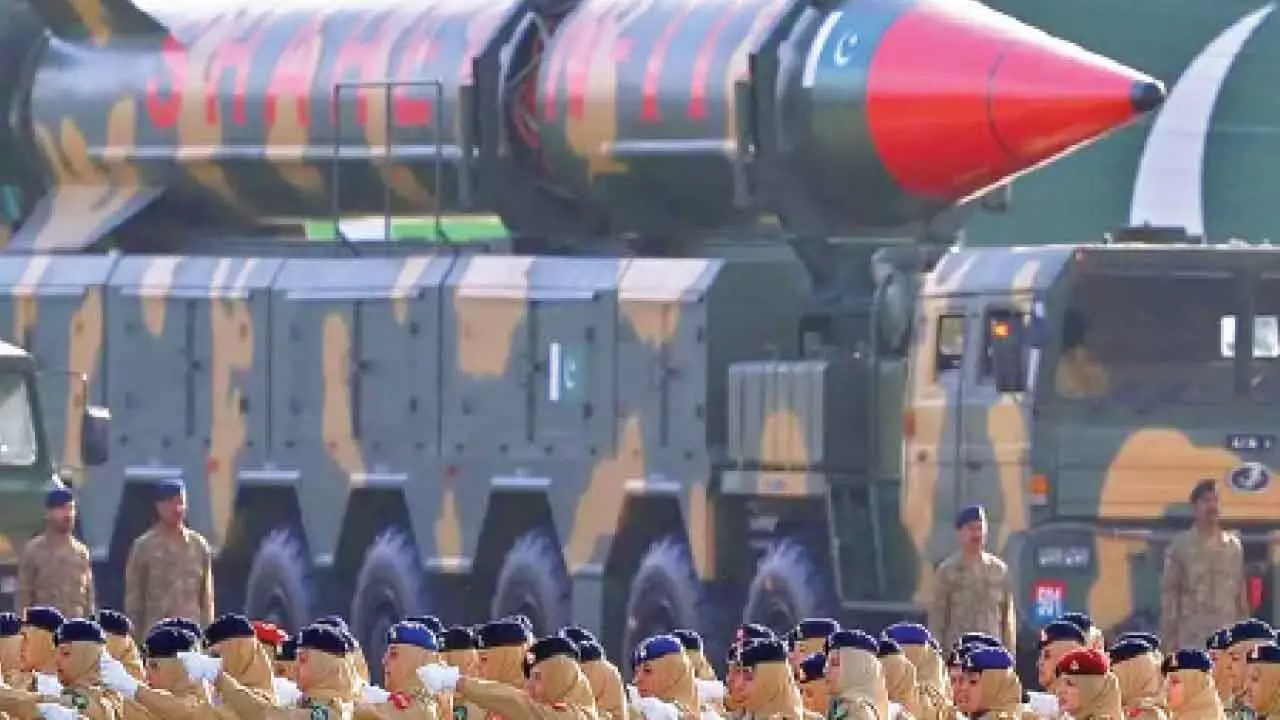
United States’ intelligence chief Tulsi Gabbard on Wednesday told lawmakers that Pakistan’s long-range ballistic missile development could include missiles capable of targeting the US.
In a testimony before the Senate Intelligence Committee, Gabbard, the Director of National Intelligence, also said that the threats to the US were set to expand collectively from more than 3,000 missiles at present to more than 16,000 missiles by 2035.
“The US secure nuclear deterrent continues to ensure safety in the Homeland against strategic threats. However, Russia, China, North Korea, Iran and Pakistan have been researching and developing an array of novel, advanced, or traditional missile delivery systems with nuclear and conventional payloads that put our Homeland within range,” Gabbard said.
She said the US Intelligence Community assesses that threats to the Homeland will expand collectively to more than 16,000 missiles by 2035, from the current assessed figure of more than 3,000 missiles. “The IC assesses that China and Russia are developing advanced delivery systems meant to be capable of penetrating or bypassing US missile defences,” Gabbard said.
The US top intelligence official said that North Korea’s ICBMs can already reach US soil, and it is committed to expanding its nuclear arsenal. “Pakistan’s long-range ballistic missile development potentially could include ICBMs with the range capable of striking the Homeland,” Gabbard said.
She said that Iran has previously demonstrated space launch and other technology it could use to begin to develop a militarily viable ICBM before 2035, should Tehran attempt to pursue the capability. “However, these assessments will be updated as the full impact of Operation Epic Fury’s devastating strikes on Iran’s missile production facilities, stockpiles, and launch capabilities is determined,” Gabbard said.
India, Pak ties ‘remain a risk’ for nuclear conflict
India and Pakistan relations remain at risk for nuclear conflict, according to the Annual Threat Assessment of the US Intelligence Community presented to the US Senate on Wednesday.
According to the 34-page report, though India and Pakistan do not seek to open conflict, conditions exist for terrorist actors to continue to create catalysts for crises. “India-Pakistan relations remain a risk for nuclear conflict given past conflicts where these two nuclear states squared off, creating the danger of escalation. The terrorist attack last year near Pahalgam, in the Indian Union Territory of Jammu and Kashmir, demonstrated the dangers of terrorist attacks sparking conflict,” the document said.
“President Trump’s intervention de-escalated the most recent nuclear tensions, and we assess that neither country seeks to return to open conflict, but that conditions exist for terrorist actors to continue to create catalysts for crises,” it said.
On South Asia, the document said that ISIS-K (Islamic State – Khorasan Province) maintains a foothold in the region and aspires to conduct external attacks, but the Taliban is improving its security services and has taken aggressive action against it. “The Taliban has conducted extensive raids against ISIS-K targets, probably thwarted some attacks, and driven some ISIS-K leaders to relocate to neighbouring countries,” it said.
“Relations between Pakistan and the Taliban have been tense, with intermittent cross-border clashes, as Islamabad has become increasingly frustrated with anti-Pakistan terrorist groups’ presence in Afghanistan while Islamabad faces growing terrorist violence,” it said.
The document said on February 26, the Afghan Taliban launched strikes against Pakistani military positions along their shared border, claiming retaliation for prior Pakistani airstrikes. Pakistan responded within hours by bombing Afghan border provinces and the capital Kabul– the first time Pakistan has struck Afghanistan’s urban centres, it said.
“The fighting has continued since it erupted. Pakistan’s army chief warned this month that lasting peace requires the Taliban to sever ties with militants targeting Pakistan. The Taliban’s public posture has been to call for dialogue, but it has denied harbouring anti-Pakistani militants,” the document said.





